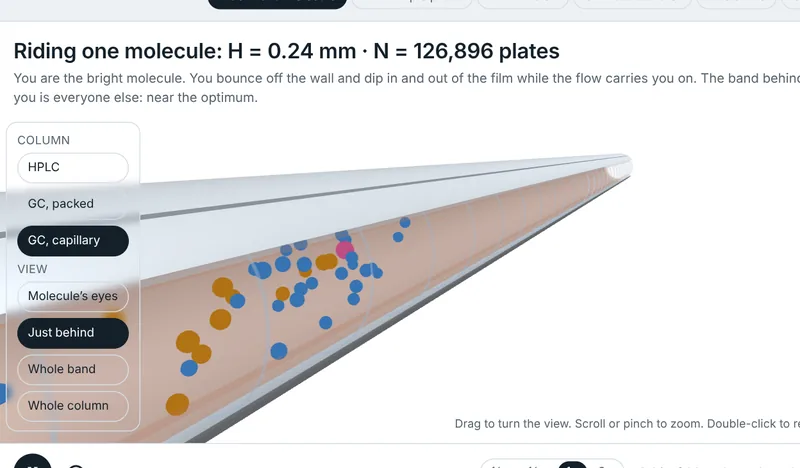
 Inside the Column (Van Deemter in 3D)Ride through the column as one molecule: weave between packing particles or bounce along a capillary wall, and see what multiple paths, diffusion and mass transfer each do to the band. A companion to the Van Deemter Explorer, which covers the same equation term by term.
About
Making chemistry visible through interaction.
HexaMole is a chemistry education project focused on making chemistry easier to visualize, explore, and understand, with a particular emphasis on analytical chemistry and chemical instrumentation. Through interactive simulations and practical scientific tools, the project helps students and educators explore chemical concepts, understand how instruments work, and apply what they learn.
HexaMole also aims to make chemistry education more accessible by providing freely accessible alternatives to commonly used scientific software. From drawing molecular structures to analyzing experimental data, the goal is to give students, educators, and researchers the tools they need without the cost of commercial software.
Featured tools
ChemGPT agentsAI chatbots for chemistry classroom activitiesComing soon
Interactive visualizations
Chromatography
Inside the Column (Van Deemter in 3D)Ride through the column as one molecule: weave between packing particles or bounce along a capillary wall, and see what multiple paths, diffusion and mass transfer each do to the band. A companion to the Van Deemter Explorer, which covers the same equation term by term.
About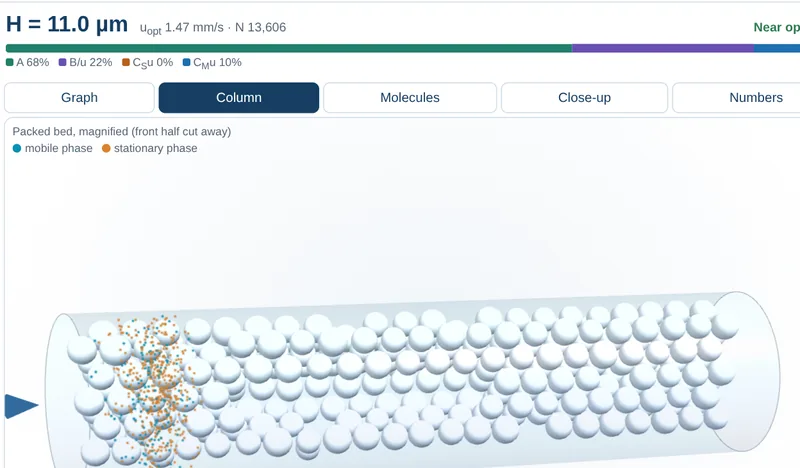 Van Deemter ExplorerChange the column and mobile-phase conditions to see what controls band broadening and the optimum linear velocity. The companion to Inside the Column: this one is for working with the equation and the numbers.
About
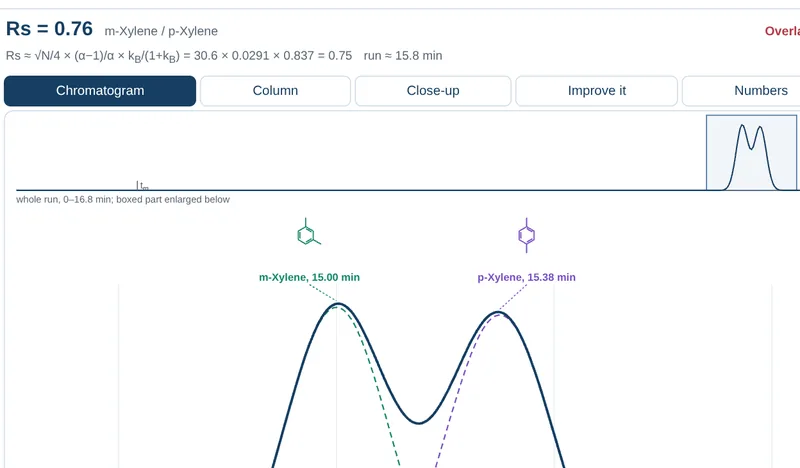 Chromatographic ResolutionExplore how column efficiency, retention, and selectivity affect the separation of two compounds.
About
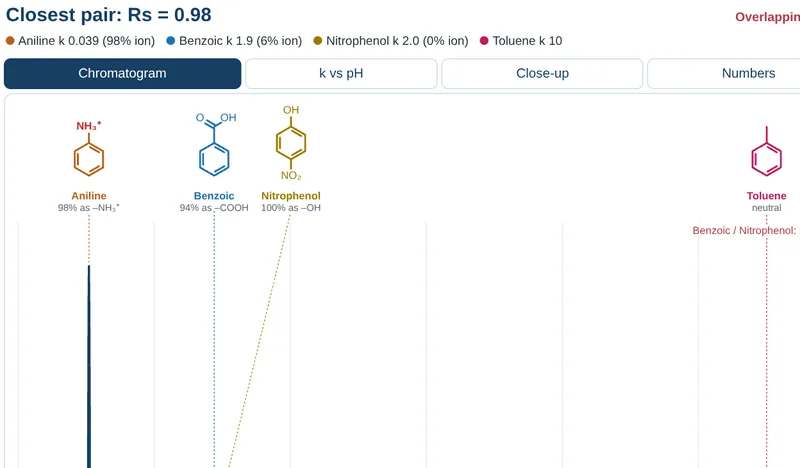 Retention and pH ExplorerSee how pH, pKa, and organic solvent content change retention in reversed-phase HPLC.
About
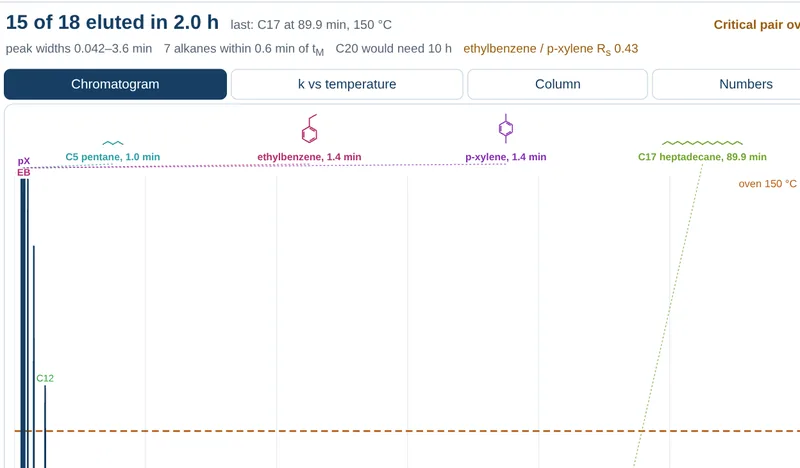 GC Temperature ProgrammingCompare isothermal and temperature-programmed GC to see how the oven program changes elution.
About
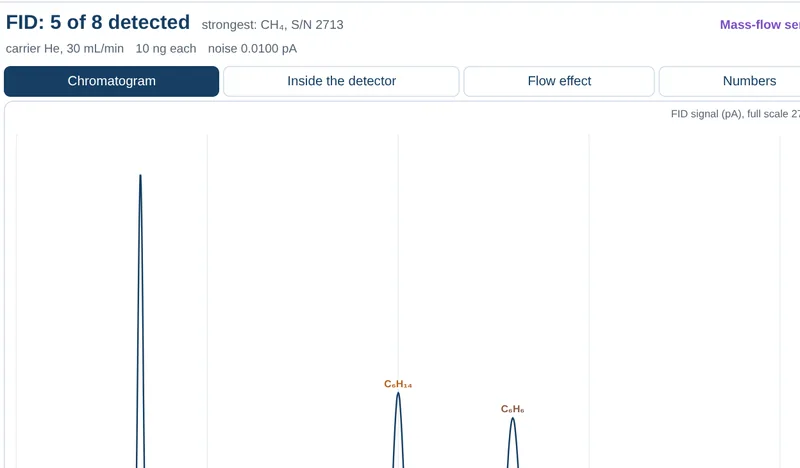 GC DetectorsCompare FID, TCD, and ECD responses and see why the same sample gives different detector signals.
About
Mass spectrometry
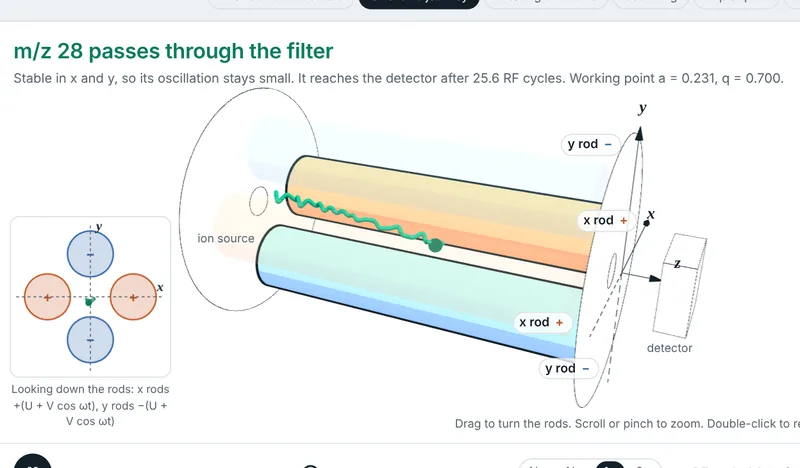 Quadrupole Mass FilterWatch ions weave through the rods and see why only one m/z survives the combined DC and RF fields, with the stability diagram alongside.
About
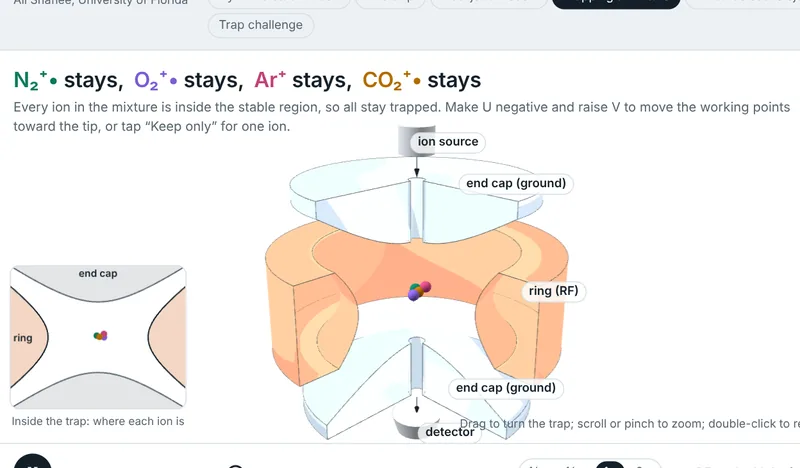 Quadrupole Ion TrapTrap ions in three dimensions, watch their figure-of-eight paths, then eject them in mass order and follow an MS/MS sequence.
About
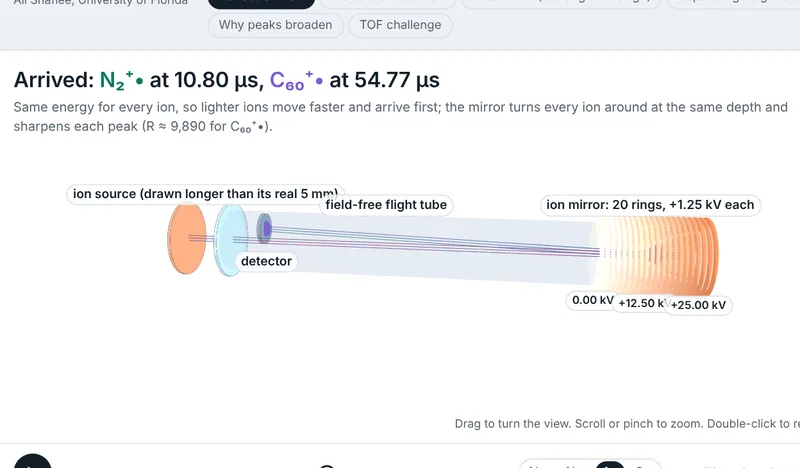 Time-of-Flight (TOF)Ions of the same energy separate by mass as they fly; see the reflectron fix the energy spread and sharpen the peaks.
About
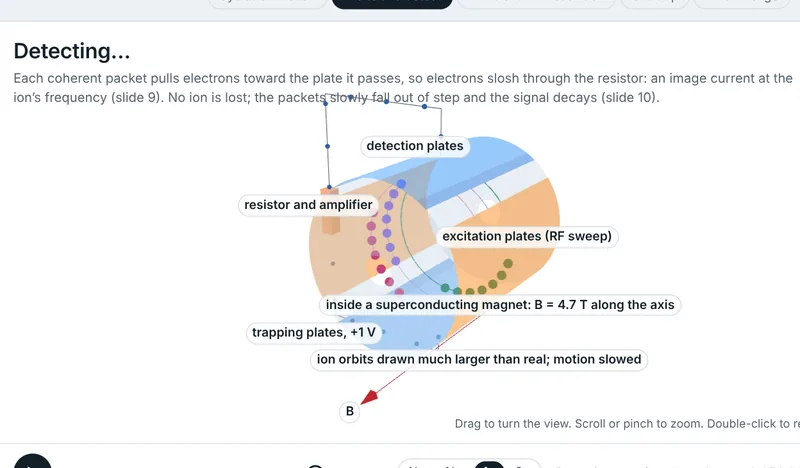 FT-ICR and OrbitrapIons circle or oscillate and induce a current; the Fourier transform turns that signal into very high resolution spectra.
About
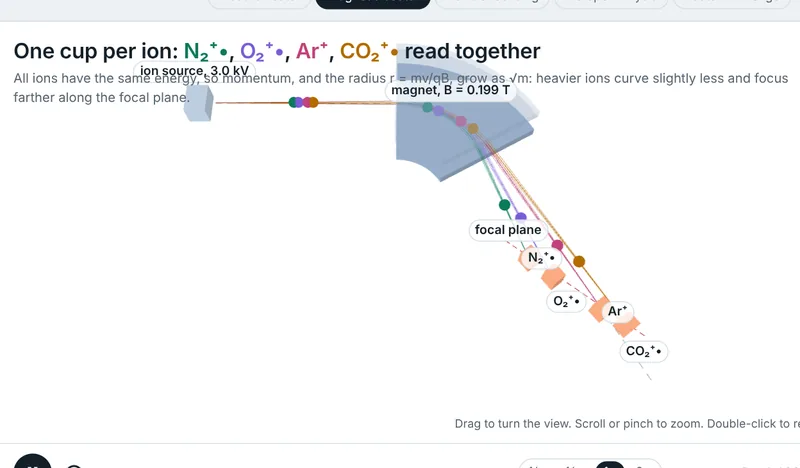 Sector Mass AnalyzersElectric and magnetic sectors separate by energy and by momentum; see how double focusing sharpens isotope measurements.
About
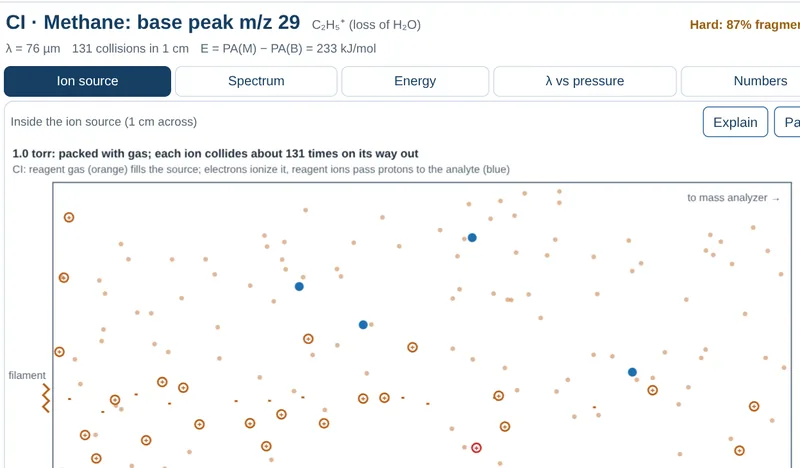 Ionization Explorer (EI vs CI)Change source conditions and reagent gases to understand electron and chemical ionization.
About
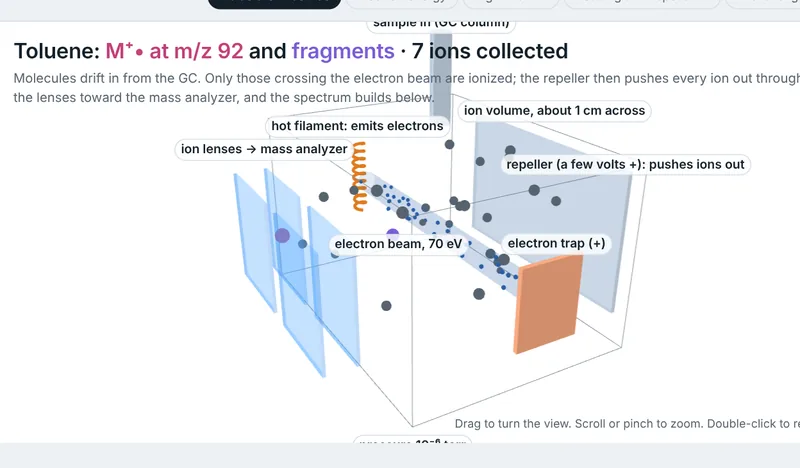 Electron Ionization (EI)Watch 70 eV electrons ionize molecules in the source, and see why the fragment pattern is a fingerprint and why high vacuum is essential.
About
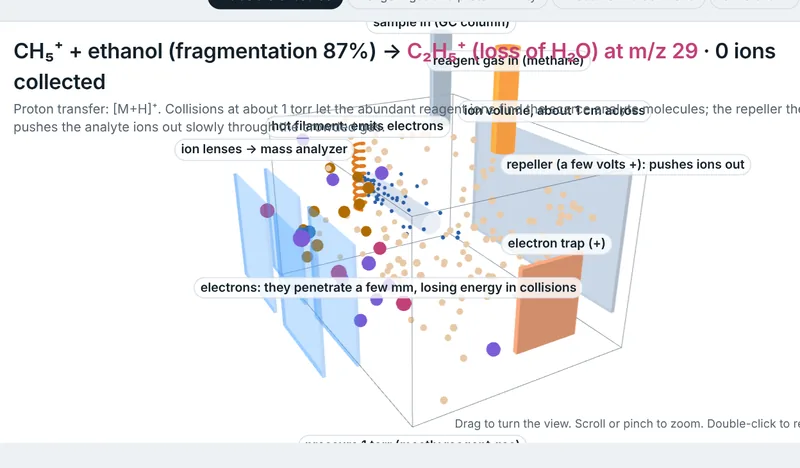 Chemical Ionization (CI)Choose a reagent gas and see how proton affinity sets the energy left in MH⁺, and how gently the molecule is ionized.
About
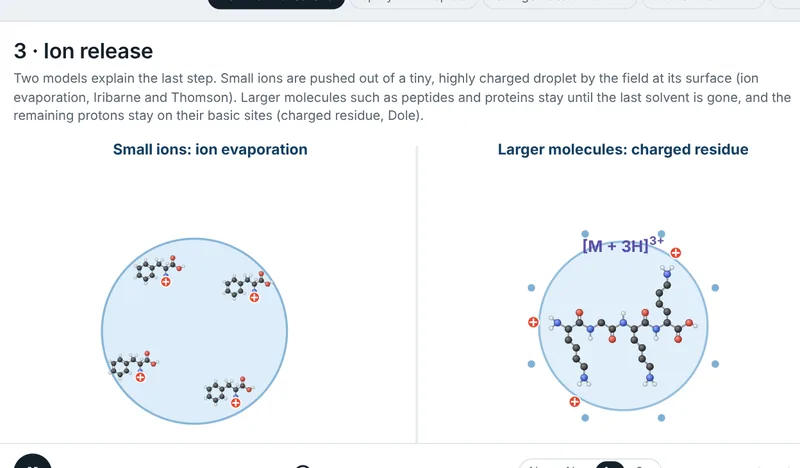 Electrospray Ionization (ESI)Follow the Taylor cone, shrinking droplets and ion release, then work out charge and mass from a charge-state envelope.
About
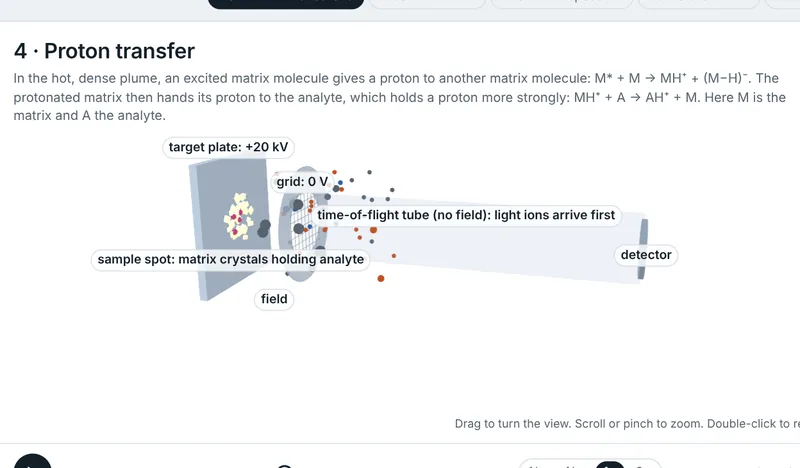 MALDIStep through the laser pulse, the plume and proton transfer, then see how laser energy and matrix choice change the spectrum.
About
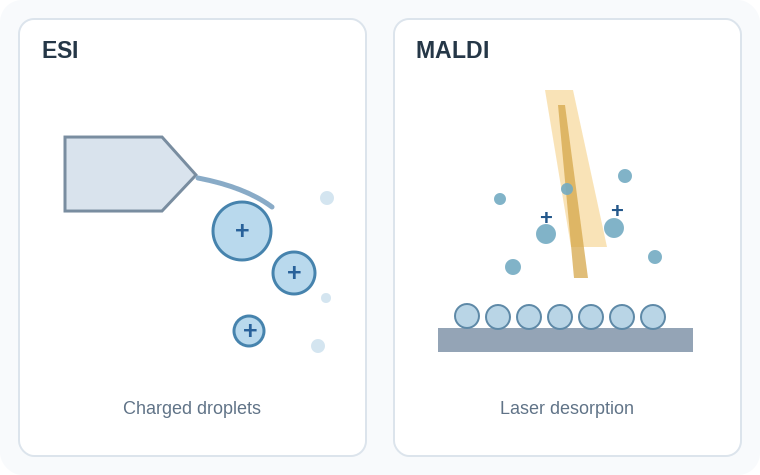 ESI–MALDI ExplorerCompare electrospray and MALDI ionization, follow each mechanism, and explore charge states and mass spectra.
About
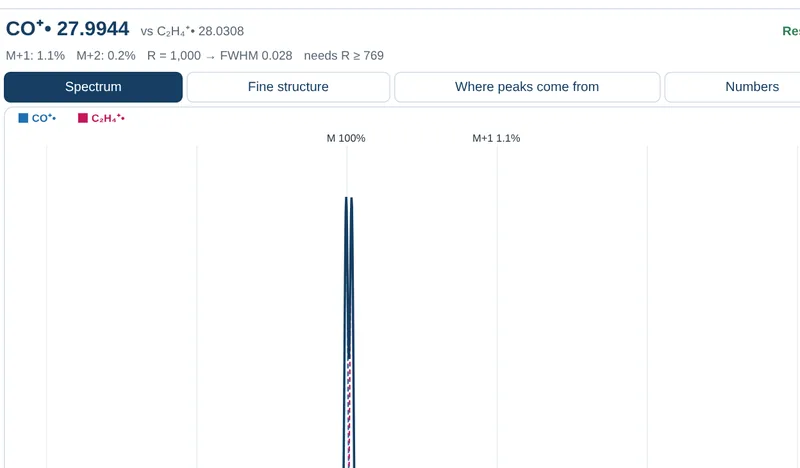 Mass Spectrum ExplorerExplore isotope patterns, resolving power, and electrospray charge states in small molecules and proteins.
About
Spectroscopy
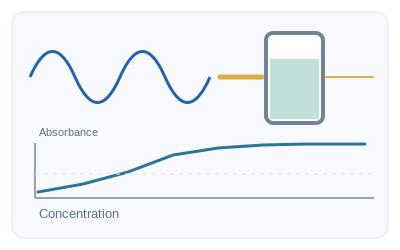 Light & Absorbance LabExplore wavelength, photon energy, Beer–Lambert absorbance, and coffee colorimetry with interactive simulations and an optional webcam experiment.
About
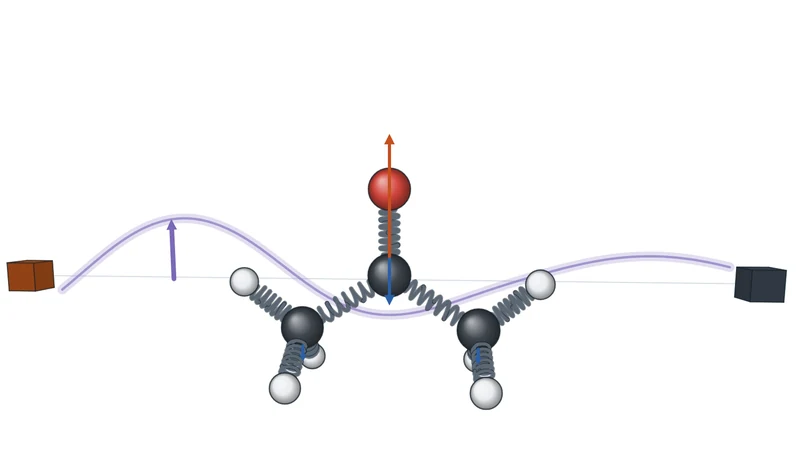 FTIR LabBonds as springs: swap in heavier isotopes, shine tunable IR light on a molecule and watch it absorb at resonance, then run a real FTIR scan with interferogram, resolution and gas-phase HCl lines.
About
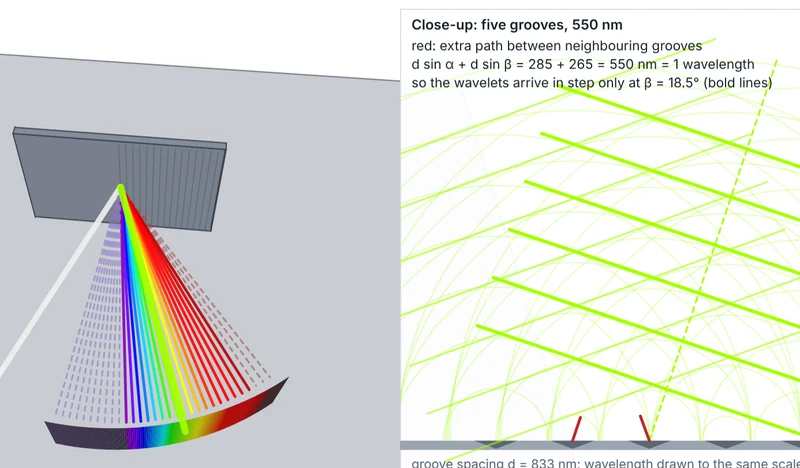 Inside the UV-Vis SpectrophotometerFollow light through a UV-Vis instrument: the lamps, a grating or prism splitting the colours (with a close-up of how), the monochromator slit, why Beer’s law bends, double-beam design, and ten real samples to scan.
About
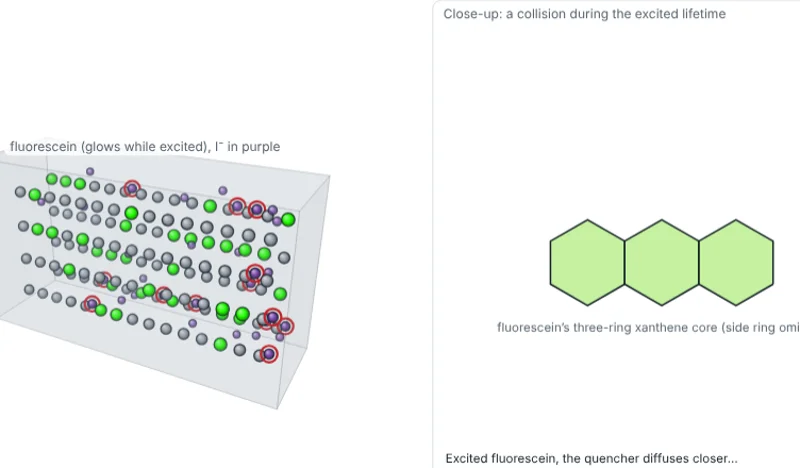 Fluorescence & PhosphorescenceWatch excited molecules choose between light and heat, see why emission is redder, measure quenching and the inner-filter effect in a real cuvette, and separate phosphorescence with a timed detector.
About
General chemistry
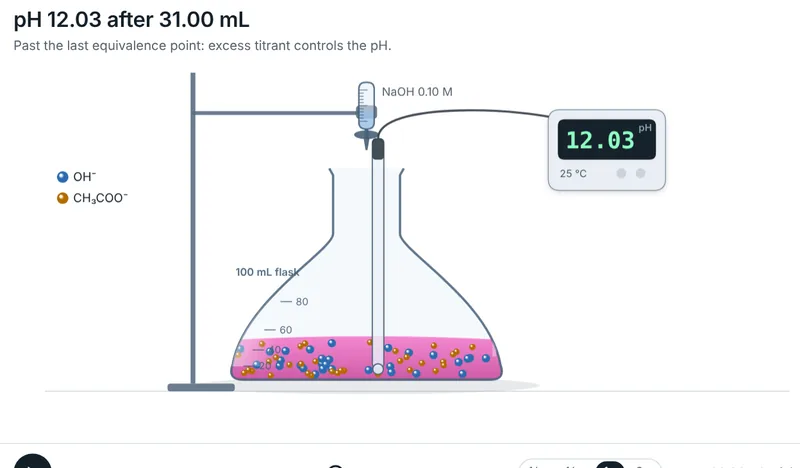 Acid–Base LabA virtual acid–base bench: mix any solution, build a buffer or run a titration and read the exact pH, with the textbook method worked alongside it. Buffer capacity, indicators, speciation and temperature, plus a 60-question practice bank with hints.
About
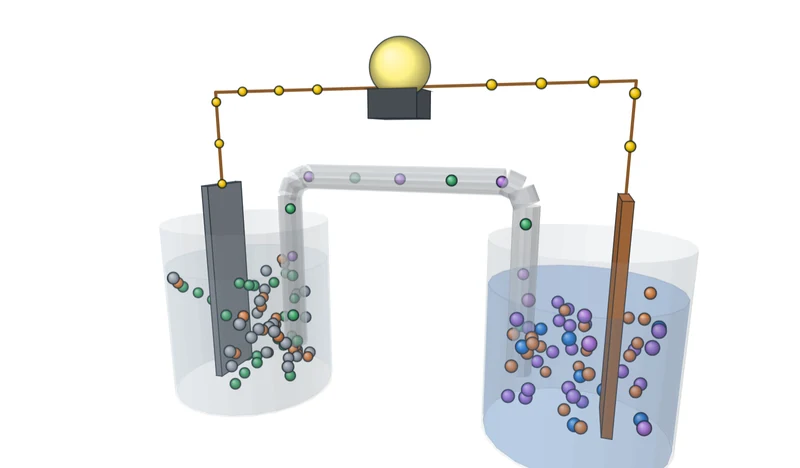 Electrochemistry LabWatch a galvanic cell run atom by atom: electrons in the wire, ions in the salt bridge, the Nernst equation term by term, real batteries cut open, and gold plating at the electrode surface.
About
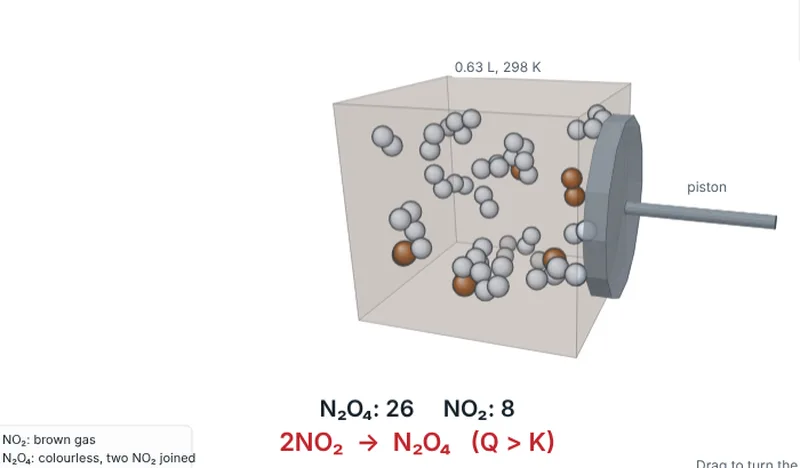 Dynamic Equilibrium & Le ChâtelierWatch N₂O₄ and NO₂ trade places molecule by molecule: squeeze the vessel with a piston, heat it on a hot plate, add gas or argon, and see Q chase K until the colour settles.
About